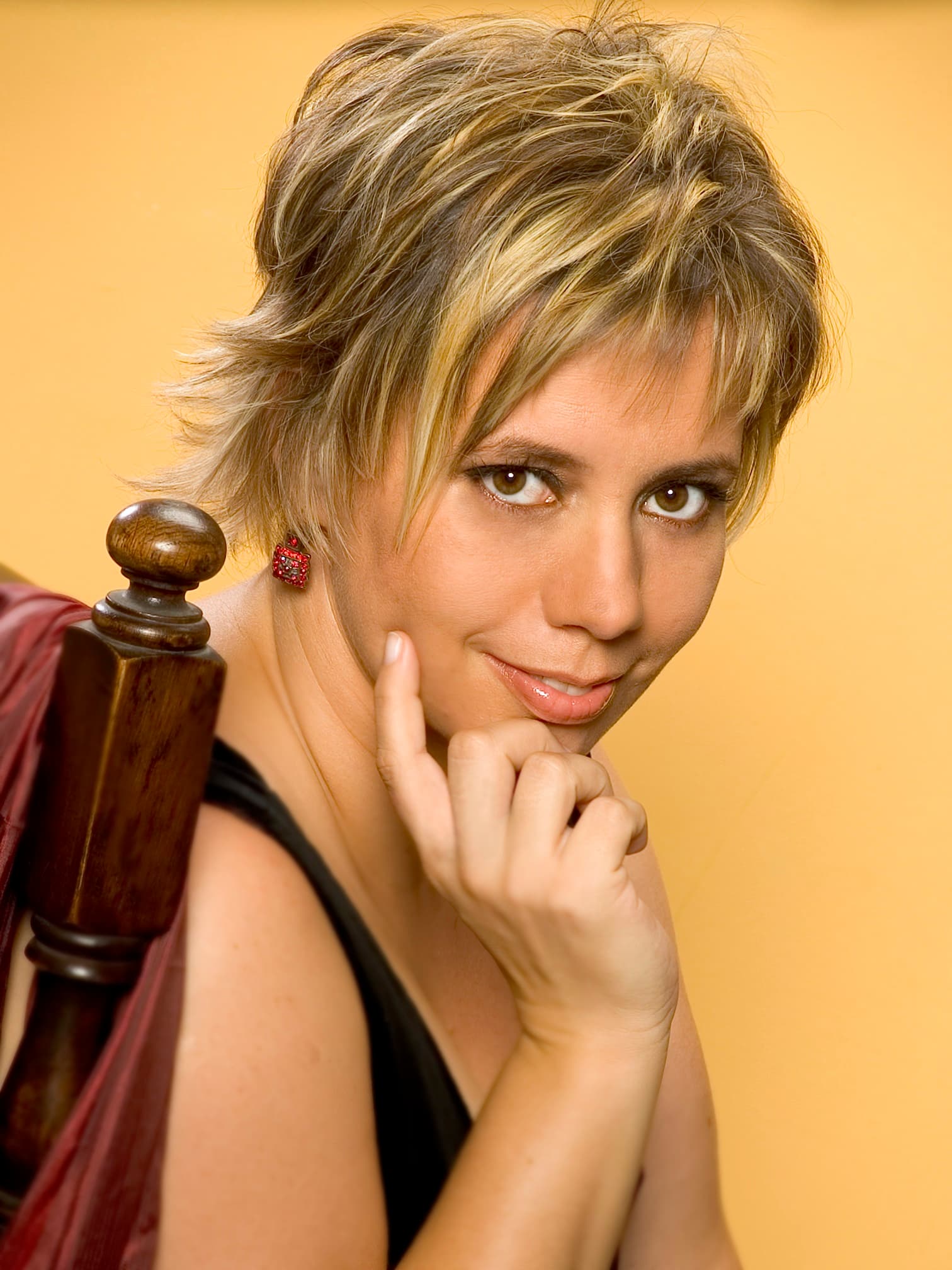
Susanna Crespo Held
Mezzo-soprano
About Susanna
Born in Germany, she studied musically in Spain and Italy, where she specialiized in lyric, baroque and liederistic singing with the masters Peter Kooij, Carmen Bustamante, Mitsuko Shirai, Montserrat Figueras, Mark Tucker, Marta Almajano, Cristina Miatello and A. Goussev.
After the study, she was immediately invited to perform with various ancient music groups, including Capella Reial de Catalunya, Ensemble Elyma, Capella de Ministers, Capilla Real de Madrid, Arion Consort, Brevis Consort, Orquestra Barroca Catalana, Orchestra Barocca Siciliana (I) and others, under the guidance of directors of the caliber of Jordi Savall, Ottavio Dantone, Gabriel Garrido, Aldo Ceccato, Nigel North, Giulio Prandi, Hiro Kurosaki, Ottavio Dantone and Darius Stabinskas and others.
She often holds Masterclasses dedicated to Baroque Singing, among which one of the Conservatorio Superior de Música "Joaquín Rodrigo" de València is dedicated to the vocal music of Johann Sebastian Bach stands out.
Currently, she works as a teacher of Community Foreign Language (German) at the Conservatory "G. Cantelli "of Novara (I) and of Diction and Phonetics of the German and French Language applied to Singing at the" C. Pollini "of Padua (I).
Read more"Music knows no borders or genres. As a musician, my mission is to build bridges between cultures and traditions."
— Susanna Crespo Held
Videos
A selection of videos showcasing Susanna's performances and artistic expression across different stages and collaborations.

Wiener Klassik Teaser
Susanna Crespo Held (mezzosoprano), Enrico Luca (traverso), Marco Brolli (traverso), Ramashanty Cappello (cello)
Excerpts from Classical Programme with the Soloists of Orchestra Barocca Siciliana
Recordings
Discography and featured recordings by Susanna Crespo Held
Beethoven Folk - The Sweetest lad was Jaimie
Susanna Crespo Held, Musica Poëtica Barcelona
Clara Schumann - Warum willst du and're fragen
Susanna Crespo Held, Joan Miquel Hernández Sagrera
Robert Schumann - Die Stille
Susanna Crespo Held, Joan Miquel Hernández Sagrera
Scarlatti - Cantatas
Susanna Crespo Held, Musica Poëtica • 2000
Alessandro Scarlatti is regarded as one of Italy's leading Baroque composers. His solo cantatas quickly made him a favorite of Roman nobility; 799 survive today. Inspired by mythology and pastoral poetry, they combine recitatives and arias with basso continuo and solo instruments, revealing his expressive mastery.
Featured content: